Rohit Prabhakar

I build agentic revenue systems for Fortune 50 companies

  • Digital Transformation
  • Leadership
  • Marketing
  • Writing
  • Home
  • Privacy Policy

Customer Singularity

July 2, 2026 by Rohit Leave a Comment

I want to put the definition of customer singularity on the record.

For thirty years, personalization had a cost curve. Serving one customer perfectly was expensive. Serving a million customers identically was cheap. Segmentation was the practice of managing the compromise in between. The segment, the cohort, the persona, the demographic: all of it was born of a budget constraint, not a strategy. I laid out that thirty-year failure in The Broken Promise.

That constraint just collapsed. Generative AI and agentic systems have driven the marginal cost of serving one customer perfectly down toward the cost of serving them in aggregate. The mechanics of that collapse are in The Three-Layer Unlock. When that happens, the reason segmentation existed disappears.

I call the destination customer singularity.

What customer singularity means

Customer singularity is the point where the marginal cost of serving one customer perfectly collapses toward the cost of serving them in aggregate, and segmentation becomes obsolete.

Not “better segmentation.” Not “micro-segments.” Not “hyper-personalization” bolted onto a cohort model. Obsolete, the way switchboards and gas lamps are obsolete. Once serving the individual costs the same as serving the average, the average customer becomes an analytical error.

Three things follow from this definition.

First, this is an economic claim, not a technology claim. The technologies (consented data, agentic inference, generative output) matter because of what they did to a cost curve. If you are debating tools, you are having the wrong conversation.

Second, it applies to every customer-facing function. Marketing pays a Relevance Tax when it uses AI to scale generic output. Sales pays an Autonomy Tax when it deploys autonomy it has not earned. Service pays a Deflection Tax when it measures deflection while the customer measures resolution. Product pays a Cohort Tax when it analyzes groups that no longer need to exist. Four functions, one cause.

Third, it is a destination, not a feature. You do not buy customer singularity. You build the operating system that reaches it: the data layer, the intelligence layer, the generation layer, the organizational design, and the trust covenant that makes it durable.

Most Fortune 500 companies are not there. Most are not close. MIT found that 95 percent of enterprise generative AI pilots produce no measurable business impact, and only about 5 percent capture real value. The gap between that 5 percent and everyone else widens every quarter, because the moat compounds.

I have spent the last several months laying out the full argument in the Market-of-One series, and the complete treatment is coming in a book. But the definition should exist in public, plainly, on the record, as of today.

Every customer is a market of one. Segmentation was a compromise. The compromise is over.

Customer singularity is what comes next.

Filed Under: Trends Tagged With: Agentic AI, AI personalization, customer experience, Generative AI, market of one, segmentation, ustomer singularity

The Market-of-One Operating System: The Series Finale

May 19, 2026 by Rohit Leave a Comment

The Market-of-One Operating System is the synthesis of everything this series has built. Across eight essays I described eight components. This final essay argues they were never eight separate ideas. They are one system, and the system, not any single piece, is what almost no enterprise actually builds. The destination that system produces has a name: Customer Singularity, the point where the marginal cost of serving one customer perfectly collapses toward the cost of serving none, and segmentation finally dies for good.

In Week 8, I argued that personalization without trust is surveillance, and that the covenant is the architecture that makes Market-of-One legitimate. That was the last component. This week I connect all of them, and I give you the instrument to measure where your enterprise actually stands.

Before the synthesis, the diagnostic. You cannot build an operating system you have not measured. The proprietary model I use to run this assessment is called ARCA, the Agentic Revenue and Customer Architecture: a four-stage deployment model whose first stage, Assess, is an honest maturity diagnostic across five dimensions. Data readiness. Customer intelligence. Agent architecture. Organizational alignment. Governance.

Those five dimensions are not arbitrary. They are the five layers of the operating system this essay will describe, measured before they are built. Most enterprises score high on one or two and assume that means they are most of the way there. The diagnostic exists precisely to break that assumption, because the system produces value only when all five dimensions clear the bar together. Score this honestly before reading further: on each of the five, are you genuinely operational, or do you have a pilot and a slide?

Start with a number that should stop every executive reading this. Microsoft’s 2026 Work Trend Index, published two weeks ago, analyzed trillions of productivity signals and surveyed 20,000 workers across ten countries. The finding: 58% of AI users say they now produce work that was impossible a year ago. That figure rises to 80% among the most advanced users. The technology is not the constraint. It has not been the constraint for some time.

Here is the same study’s other finding. Only 13% of workers say their employer rewards reinventing work with AI when results fall short. Only 26% say leadership is consistently aligned on AI strategy. Only 19% sit in what Microsoft calls the Frontier zone, where individual capability and organizational readiness reinforce each other rather than cancel each other out. Microsoft named this the Transformation Paradox: the forces driving AI adoption are simultaneously suppressing it.

Read that again. The capability is ready. The organization is not. The gap between the two is the entire subject of this series, and it is the reason a thirty-year-old promise about personalization still goes unkept at most companies even when every component to keep it is now available off the shelf.

Two CEOs Who Saw the Magnitude

In early 2026, two of the most accomplished operators in corporate America stepped down, and both said the same thing on the way out.

Coca-Cola’s James Quincey told his board the company now needs “someone with the energy to pursue a completely new transformation of the enterprise.” Walmart’s Doug McMillon was more direct: “I could start this next big set of transformations with AI, but I couldn’t finish it.” Neither was a struggling CEO pushed out for poor performance. Both had real transformations behind them. Both looked at what AI now requires and concluded it was a different job than the one they had been doing.

This is the signal. When leaders of that caliber describe AI reinvention as a total-enterprise undertaking that exceeds even their reach, the comfortable assumption that this is an incremental technology upgrade collapses. McKinsey ran an exercise with the leadership team of a high-performing med-tech company: each executive physically stood in a spot representing how much of the business they believed would need to be completely redesigned by 2026 to win in the AI era. Every one of them stood between 80% and 100%.

The series has spent eight weeks describing what that redesign actually consists of. Now I will assemble it.

What the Series Built, One Piece at a Time

Each essay introduced one component and named one failure mode. Walked quickly, the path looks like this.

Week 1, The Broken Promise. Segment-based marketing was never personalization. It was demographic averaging dressed in personalized language. The promise was a market of one. The delivery was a market of forty thousand lookalikes.

Week 2, The Three-Layer Unlock. Real personalization requires three layers working together: a data foundation, an inference layer, and a generation layer. Most enterprises have fragments of one or two.

Week 3, The Architecture. The failure modes are predictable. Digital Taxidermy, where you preserve the shape of a customer without the life in it. The architecture is incomplete in specific, diagnosable ways.

Week 4, The Inversion. The marketing job inverts. You stop producing campaigns and start producing the system that produces the campaigns. The Uncanny Valley of personalization is what happens when you automate the old job instead of inverting it.

Week 5, Why Pilots Fail. Ninety-five percent of generative AI pilots never reach production. They fail at the Adjacent Process Gap, the space between a working demo and the operational reality it never touched.

Week 6, The Mandate. Customer-experience AI has no owner because it spans three. The CMO-CDO-CIO triad, with shared P&L accountability, replaces the Ownership Vacuum that kills most programs.

Week 7, The New Moat. The durable advantage is not the model, the data, or the talent. It is the Compounding Loop, where each cycle of data, inference, generation, and trust accelerates the next. The moat is duration, not assets.

Week 8, The Privacy Covenant. The loop’s unfakeable input is trust. Personalization without trust is surveillance, and the Surveillance Tax is the compounding cost of getting that wrong.

Eight components. Eight failure modes. Here is the part nobody internalizes: every one of these was presented as a fix, and not one of them works alone.

The Market-of-One Operating System

An operating system is not a feature. It is the layer that makes every feature run, coordinate, and compound. The Market-of-One Operating System has five layers, and the defining property is that it produces value only when all five operate together.

Layer 1, the Data Foundation. Identity resolution, consent state, behavioral signals, and the zero-party data the covenant earns. This is Week 2’s bottom layer and Week 8’s output, the same layer viewed from two ends. Without it, every layer above is inference on sand.

Layer 2, the Intelligence Layer. The models and real-time decisioning that turn data into a next-best action for a specific person in a specific moment. This is Week 2’s middle layer and Week 5’s graveyard, the place pilots die when the Adjacent Process Gap is never closed.

Layer 3, the Generation Layer. The experiences, messages, and offers produced per individual rather than per segment. This is Week 2’s top layer and Week 4’s inversion, the layer that only works when you have rebuilt the job around producing the system rather than the output.

Layer 4, the Organizational Design. The CMO-CDO-CIO triad from Week 6, with shared accountability for one P&L metric. This layer is not technical. It is the layer that decides whether the other three ever connect, because in most enterprises they are owned by people who do not share a number.

Layer 5, the Covenant. The privacy architecture from Week 8 that makes the entire stack legitimate, and the trust that is the only unfakeable input to the flywheel from Week 7. This layer is not a constraint on the system. It is the condition that lets the system compound instead of stalling after one cycle.

The mistake nearly every enterprise makes is treating these as a maturity ladder, something you climb one rung per year. It is not a ladder. It is a system. A company with a strong data foundation, good models, and no triad does not have sixty percent of a Market-of-One. It has zero, because the layers do not connect and the flywheel never turns. This is precisely Microsoft’s Transformation Paradox stated in architectural terms. The 19% in the Frontier zone are the companies where all five layers reinforce each other. The 81% have components that cancel out.

What the Operating System Produces: Customer Singularity

When all five layers run together, the economics of serving a customer change in kind, not in degree.

For thirty years, personalization had a cost curve. Serving one customer perfectly was expensive. Serving a million customers identically was cheap. Everything in between was a compromise called segmentation, the practice of grouping people into the smallest number of buckets you could afford to serve differently. The entire discipline of marketing was an exercise in managing that cost curve.

The Market-of-One Operating System flattens the curve. When the data foundation is unified, the intelligence layer is real-time, the generation layer is automated, the organization is aligned, and the covenant earns continuous consent, the marginal cost of serving one customer as a genuine market of one collapses toward the marginal cost of serving none. Not lower than mass marketing. Lower than segmentation, while being more precise than the most expensive bespoke service you could previously afford.

I call this Customer Singularity. It is the point where segmentation does not improve, it becomes obsolete, because the reason segmentation existed, the cost of differentiation, no longer applies. You do not segment a market you can serve one person at a time at the cost of serving them in aggregate.

This is not a future state. McKinsey’s 2026 research on twenty AI leaders found technology-and-AI-driven transformations delivering an average 20% EBITDA uplift, breakeven in one to two years, and three dollars of incremental EBITDA for every dollar invested, specifically by reinventing one to three domains end to end rather than deploying tools across all of them. The companies approaching Customer Singularity are not running more pilots. They built the operating system in a focused domain and let it compound.

The CEO Charter

Here is the part that cannot be delegated. The reason Quincey and McMillon framed this as a different job is that the operating system cuts directly across existing structures, incentives, and power dynamics. BCG’s 2026 research on AI as a CEO mandate states it plainly: this kind of reinvention is almost impossible to manage from the middle of the organization, because the people closest to the work are also the ones whose roles the redesign changes.

There are six decisions only the CEO can make. Not influence. Make.

One. Name the triad publicly. The CMO, CDO, and CIO share accountability for the Market-of-One outcome. This only holds if the CEO says it out loud, in front of the company, and means it. A triad assembled by anyone below the CEO is overridden by the first turf conflict.

Two. Tie one P&L metric across all three. Not three dashboards. One number, owned jointly. Customer lifetime value, net revenue retention, or customer-experience-driven margin. Shared accountability is a fiction without a shared number.

Three. Fund the data foundation as infrastructure, not as a project. Projects end. Infrastructure compounds. The data foundation is Layer 1 of an operating system, not a line item in a marketing budget, and the CEO is the only person who can move it onto the balance sheet of how the company thinks.

Four. Make the covenant non-negotiable. Privacy and trust are not the legal team’s containment problem. They are Layer 5, the condition for compounding. The CEO sets this as a principle the growth team cannot trade away under quarterly pressure.

Five. Rewire incentives so reinvention is rewarded even when it fails. This is the Microsoft 13% statistic, and it is the quiet killer. If the organization punishes failed reinvention more than it punishes successful stagnation, no operating system gets built, regardless of what the strategy deck says. Only the CEO can change what gets rewarded.

Six. Own the ambition personally. McKinsey’s CEO research found the best leaders spend their time not on strategy but on moving the organization from A to B. The ambition for Market-of-One cannot be sponsored. It has to be carried, visibly, by the person every other executive watches to calibrate how much this actually matters.

The Transformation Roadmap: ARCA

The operating system is built in sequence, not all at once, and the sequence matters because the layers depend on each other. The model I use to run this is ARCA, four stages over a realistic 24 to 36 month enterprise timeline. The acronym is the sequence: Assess, Architect, Command, Amplify.

Assess, the diagnostic. The five-dimension maturity diagnostic from the top of this essay, run for real. Data readiness, customer intelligence, agent architecture, organizational alignment, governance. Not a survey. A working blueprint of where you actually are, which gaps matter, and the sequence that will not waste motion. This stage is weeks, not months, and it is the one most enterprises skip, which is why most enterprises build the wrong thing first.

Architect, months 1 to 12. The Mandate comes first. The CEO names the triad and ties the P&L metric before anything technical happens, because every failure mode in this series proves the technology was never the thing that failed. Then build the data foundation in one domain, not enterprise-wide. Identity, consent, zero-party data capture under the covenant. One domain deep beats ten domains shallow, the single most consistent finding in the 2026 transformation research. This phase makes Week 6 and the foundation layer real.

Command, months 9 to 24. Stand up the intelligence and generation layers in the same domain. Close the Adjacent Process Gap that kills pilots by designing for operational reality from the start, not after the demo. Production deployment with governance built in from day one, and board-ready ROI checkpoints at 30, 60, and 90 days inside this phase. This is where the flywheel begins its first turn.

Amplify, months 18 to 36. The loop runs long enough to compound. Trust earned through the covenant produces zero-party data, which sharpens inference, which improves generation, which deepens trust. This is Week 7’s moat, a moat made of time, which is why it cannot be skipped or bought. Only once one domain is compounding do you extend the operating system to adjacent domains. The companies that win do not start broad. They start deep, prove the system with ARCA, and expand from a position of compounding advantage.

The Choice the Series Has Been Building Toward

Nine weeks ago I opened with a claim: personalization has been lying to you for thirty years. The promise was always a market of one. The delivery was always a segment with better grammar.

The reason the promise stayed broken was never the technology. The data tools existed. The models existed. The channels existed. What did not exist, in almost any enterprise, was the operating system that made all of it run as one thing instead of eight disconnected initiatives owned by people who did not share a number.

That is now buildable. Not easy. Buildable. The Microsoft data shows the capability is present and the organizational readiness is not, in 81% of companies. The McKinsey data shows the 20-company minority that built the system in a focused domain is already capturing 20% EBITDA uplifts. The Quincey and McMillon departures show that the leaders who see the magnitude most clearly are the ones who understand it is a total-enterprise undertaking, not a technology purchase.

Customer Singularity is not a metaphor. It is the specific economic state where serving one customer perfectly costs what serving them in aggregate used to cost, and segmentation becomes a historical artifact the way switchboards and gas lamps are historical artifacts. The companies that reach it first will spend the rest of the decade compounding an advantage their competitors cannot buy, because the moat is the years of the system running, and years cannot be purchased.

Most companies will treat this as a checklist and build three of the five layers. They will wonder why the flywheel never turns. The few that build the whole operating system, in the right sequence, with a CEO who carries the ambition rather than sponsoring it, will keep the thirty-year promise that everyone else only ever made.

That is the Market-of-One. Not a campaign. Not a platform. An operating system, and the discipline to build all of it.

This is the final essay in the Market-of-One series. The full nine-week argument, from the broken promise through the operating system, is collected at rohitprabhakar.com/market-of-one. The ARCA deployment model, including the five-dimension maturity diagnostic, is at rohitprabhakar.com/arca. If you are starting a Market-of-One transformation and want the frameworks applied to your specific context, that is the conversation I am most interested in having.


This article was developed in partnership with AI used as a research, brainstorming, and authoring collaborator. All frameworks, positions, strategic perspectives, and opinions are my own. AI was the tool. The thinking is mine.

Filed Under: Market-of-One Tagged With: AI operating model, AI transformation, CDO, CIO, CMO, customer experience, customer singularity, data flywheel, Market-of-One, Market-of-One operating system, personalization at scale, series finale, the triad

The Invisible Hand of Intelligence: Your Next Growth Engine has “In-Flow AI”

December 15, 2025 by Rohit Leave a Comment

The challenge is not with your AI models, but with requiring users to leave their workflow to access them. I propose the concept of “In-Flow AI” that ensures the elimination of context switching, interruption-free workflows, and AI that is seamlessly integrated and unobtrusive to users.

Billions invested in AI are yielding disappointing returns because current systems require users to interrupt their workflows, transfer context, and access intelligence separately, rather than embedding it where decisions are made.

This is a fundamental flaw in enterprise AI deployment, and it is likely costing more than anticipated. For instance, enterprises may be losing up to 10% of potential productivity gains annually, which equates to millions of dollars. These losses often stem from inefficiencies caused by context switching, resulting in wasted time and lower work quality.

The $20 Million Shelf-Ware Problem: Is Your AI Investment Gathering Dust?

Despite significant investment in AI, sophisticated models, and high accuracy rates, business users are not adopting the solutions developed.

Based on experience leading digital and AI transformations at Visa, Thomson Reuters, and McKesson, I have found that enterprise AI success depends less on model sophistication and more on whether users must interrupt their work to access AI.

This distinction between Destination AI and In-Flow AI explains why 73% of enterprise AI investments fail to deliver meaningful business impact. This statistic, sourced from a comprehensive McKinsey study (which says 95%; I am sticking to 73%; don’t ask me why!) on digital trends, underscores the importance of seamless AI integration in improving business outcomes. Executives can rely on this figure as a benchmark for evaluating their AI strategies.

The $64,000 Question: What Actually Makes AI Stick?

The answer requires a fundamental shift in how AI is integrated into products and operations. Moving beyond “Destination AI,” where users must stop their work, open separate tools, and transfer context, is essential. This approach is disruptive, inefficient, and ultimately ineffective.

Real-World Examples: When AI Meets Your Workflow

For example, when viewing a questionable claim on X (formerly Twitter), users prefer immediate answers without leaving their feed. Grok on X enables users to request context or fact-checking directly within the platform, providing instant insights and enhancing the user experience.

Similarly, in writing, tools like Grammarly offer real-time grammar corrections, stylistic suggestions, and tone adjustments within the user’s writing environment, serving as an intelligent co-author embedded directly in the document.

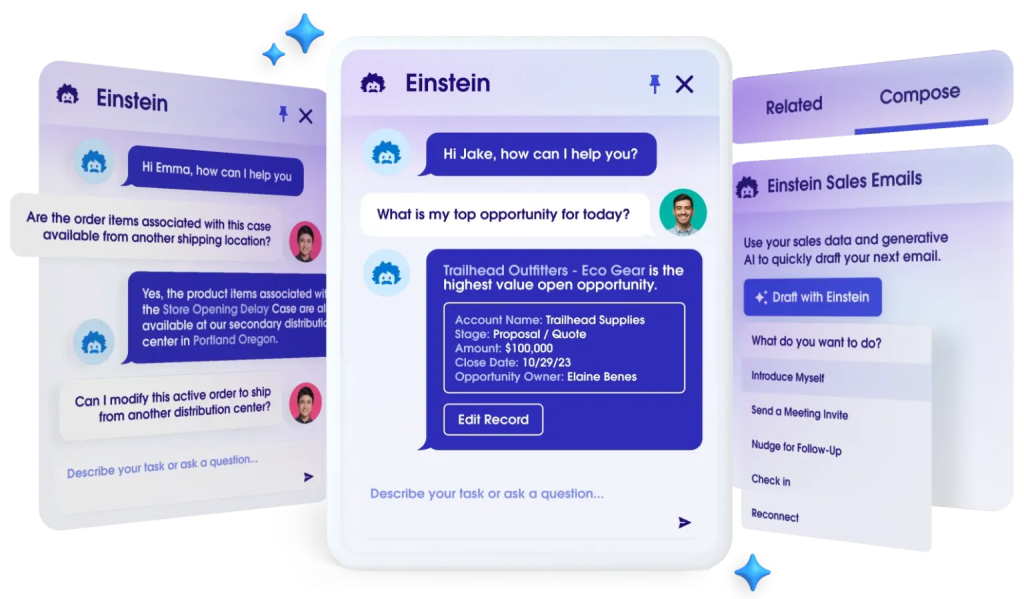
For sales teams, Salesforce Einstein proactively identifies critical follow-up actions for each client based on recent engagement, providing timely guidance without additional steps or context switching.

This is the essence of In-Flow AI.

Defining In-Flow AI: Intelligence That Doesn’t Interrupt

In-Flow AI involves strategically embedding intelligence directly into existing workflows and interfaces at every point of user intent. This approach transforms AI from a separate tool into an intuitive, seamless extension of the product.

This approach distinguishes between AI that reduces productivity and AI that enhances it.

Three principles of In-Flow AI:

  • Eliminate context switching: Intelligence should appear where work occurs.
  • Design for interruption-free workflows.
  • The most effective AI is seamlessly integrated and unobtrusive to users.

The Architectural Shift: From Models to Integration

The focus is shifting from standalone “big AI models” to smart AI integration as a competitive necessity. Organizations that embed intelligence into core product experiences will fundamentally redefine their value propositions.

Mastery of In-Flow AI, supported by a decoupled architecture and real-time inference, is the key differentiator.

The Bottom Line

The future of successful products will depend not on the most powerful AI model, but on the ability to seamlessly and intelligently integrate AI into everyday tasks and decisions.

Organizations should deliver AI to users precisely when needed, within the flow of their work and daily activities, rather than requiring users to seek it out.

The key consideration is not whether to adopt In-Flow AI, but whether your organization will lead this shift or follow competitors. Firms like Salesforce, Google, and Microsoft are already integrating AI into their products with great success, setting benchmarks for others to follow. Observing their strategies can motivate proactive action and inspire executives to embed AI seamlessly into their workflows, enhancing business outcomes.

Filed Under: Artificial Intelligence, Digital Transformation Guide, Innovation in business strategy, Robotics and artificial intelligence Tagged With: AI, AI Transformtion, customer experience, CX, GenAI, in-flow AI

Data Life Cycle in Customer Experience Journey

April 4, 2021 by Rohit Leave a Comment

When enterprises work on the customer experience, they focus on touchpoints – the single transactional points where a customer interacts with different facets of the business and its various offerings. And it is quite logical as well. These touchpoints represent critical points in the customer life cycle that must be understood and served very well. Data and Technology are the Key enablers to delivering the right and just-in-time experience. Unfortunately, most of our enterprises struggle with disconnected data and not-so-well integrated technology stacks. Even companies that have well-integrated MarTech stacks often struggle with silos of data. As we solve these silos, it is critical that we also understand this concept of Data Life Cycle in Customer Experience Journey. Yes data has it’s own lifecycle!

Understanding every aspect of customer experience and the end-to-end customer journey over a period is vital for businesses. Opting for a data-driven, outside-the-box approach toward customer experience journey helps to put customers at the core of business strategy, thus driving loyalty and revenue. The data generated and sourced from various touchpoints and its analysis can be of different forms. It can be descriptive analytics based on operational data to deducing customer sentiment and behavior from real-time data feeds from all channels and applications. Powered by a range of data analytics tools for operational, streaming, and processing unstructured data, businesses can connect the dots among the key touchpoints to optimize the customer experience journey.

The 4 main types of data that make the Data Life Cycle in Customer Experience Journey are:

  • Intent Data: Collection of behavioral signals from Deep Web that help interpret purchase or renewal intent.
  • Behavioral Data: Data that reveals new insights into the behavior of customers on the web, eCommerce platforms, online games, mobile applications, and IoT.
  • Customer Data: Wide variety of data like demographic, personal information collected by businesses to understand, communicate and engage with customers.
  • Product Usage Data: Data that helps to understand how how-often users interact with your product and their behavior while using the product

Here is a highly recommended article to read about the various technical systems like DMP, CDP and Data Lake to identify what your enterprise needs to connect and use these data types.

Data Life Cycle in Customer Journey

Phase 1: Discovery

Also known as the ‘Reach’ or ‘Awareness’ phase, this phase marks the official beginning of the customer lifecycle. Though it is tough to pinpoint the customer’s exact first contact with the business, it is vital to track the initial touchpoints as accurately as possible to design further marketing and advertising strategies. The data that can be collected during this phase includes the typical search terms, which are bringing people to the business website, the number of new visitors on the website, the point of return of visitors to a website, online reviews, new followers on social media business page, customers’ interaction on social media, data from AdWords and pay-per-click, and the usual prospects and current customer surveys.

Key data from Data Life Cycle in Customer Experience Journey at this stage are:

  • Intent Data is available mostly as anonymous data that is stitched together to make a best guess on the intent of that account or customer. ABM Tools are a very good example in B2B marketing space.
  • Behavioral Data is also available as anonymous data which can be stitched together to a specific anonymous profile.
  • Customer Data is available in case this is an existing customer trying to buy a new product.

Phase 2: Acquisition (Learn/Educate)

The contact initiating phase begins when the company comes on the radar of the prospect. The sole purpose of this phase is to convert the marketing contacts into leads or potential sales contacts. During this phase, it is vital to know the audience and develop messaging strategies according to specific buyers’ persona. The acquisition phase can provide factual data that is easy to analyze. Now, here there are two types of data involved: what and who. What data includes the view sources and referrals, traffic, event, and goal-related data. Who data consists of the business website’s viewers, their landing point after signing up or registering, and how the business website or app is utilized.

Key data from Data Life Cycle in Customer Experience Journey at this stage are:

  • Intent Data is available mostly as known data that is stitched together with behavioral data to make more targeted and personalized experience.
  • Behavioral Data is the best data available at this stage. As the prospect has clearly identified themselves, hence all their web history can be stitched together to understand their journey on your owned media to be more targeted and useful in their journey.

Phase 3: Conversion (Register/Sign up for Trial)

Conversion is the phase where the rubber meets the road. Here the company completes a qualification event when the sale is completed and a prospect is turned into a customer. The pillar on which this phase’s success lies in selling not just the products or services but the relationship. For instance, customers interested in B2B SaaS solutions aren’t merely looking for suppliers but businesses that can become their partners. Here the most critical data is conversion rate, which showcases the percentage of leads that turned into customers. Conversion rate can be tracked in respect to other metrics as well, such as website traffic. Now all prospects will not convert and will abandon the journey. It is the point where the customer lifecycles of such prospects will come to an end. Analyzing the data and finding out what went wrong with these prospects can help tweak the future marketing and strategies.

Key data from Data Life Cycle in Customer Experience Journey at this stage are:

  • Behavioral Data changes from a prospect and marketing behavior to behavior within the product and other customer-facing digital media.
  • Customer Data is officially in play at this stage as we start collecting and processing that data
  • Product Usage Data may be minimally available to inform any recommendations

Phase 4: Support

Once the customer onboarding process is complete and the product utilization is started, it becomes vital to keep all communication lines open if the customer has any issue or query. This is especially critical during the first 90 days because if the customer fails to see or leverage the product or business service’s value, he will likely leave the association. This is what is called churn. In other words, the churn rate is the percentage of existing customers a business is losing and the speed of this loss. To make a customer experience journey rich and seamless, a proactive approach toward support is the need of the hour. This phase involves different data types such as total volume by channel, the average response time, first contact resolution rate, help delay and abandonment rates, and moments of delight. The complete analysis of this consolidated data can help businesses provide their customers the best support experience possible. At this stage product data becomes a major player especially product onboarding and usage data is a critical indicator.

Key data from Data Life Cycle in Customer Experience Journey at this stage are:

  • Behavioral Data and
  • Product Usage Data In product customer behavior data becomes one of the most important but mostly under utilized data at this stage. In most companies, this data lives in silo behind the walls of product teams.
  • Customer Data continues to become mature and can be used to stitch together the best experience to wow a customer.

Phase 5: Expansion

For several companies, upselling and cross-selling are a way of drawing out as much revenue as possible from every client and customer. But this approach can backfire negatively. Instead, the company’s expansion approach should have the goal to help their customers draw out the maximum value of the purchased product or services. This value optimization can be done by creating a customer experience that delivers growing value over a while, developing a natural increase in base-product utilization, a sensible expansion into the additional features and functionalities, and adoption of logical and suitable other products or services of the company. This is the phase where data generated and gathered in the first four stages is consolidated and analyzed to launch an intelligent, insights-driven expansion strategy, one that is designed to deliver the true value. Additional datasets like product data and customer data is of great use at this stage as you identify what is the next best product can offer.

Key data from Data Life Cycle in Customer Experience Journey at this stage are:

  • Behavioral Data
  • Customer Data
  • Product Usage Data

Phase 6: Renew

It would be a bit unfair to call the renewal phase as an individual phase as it is the resultant of a robust customer lifecycle management. Renewals don’t lead a great customer success; rather they are the outcome. If an organization is facing the challenge of lower renewal, it is due to the dissatisfaction in the lifecycle such as issues in onboarding, incomplete adoption of the product, failure of utilizing the complete features that would have brought the desired value to the client, issues with ROI, etc. During this phase, a general customer consensus can be achieved by conducting surveys or through online reviews. Another key performance metric of this phase is churn rate. To sum it up, the data gathered in all the above-mentioned stages, its analysis, and utilization decide the success of the renewal phase. Most importantly, this activity should start few months before the renewal date and not few days before.

Key data from Data Life Cycle in Customer Experience Journey at this stage are:

  • Intent Data is available mostly as known data that is stitched together with behavioral data to make a targeted and personalized experience. Also, data from the deep web can be stitched together to understand if the customer is shopping around and should be offered appropriate offers or solutions to create stickiness.
  • Behavioral Data especially Product Usage Data come together to put together a very customized experience to ensure that the strong value proposition and ROI can be demonstrated to the customer so that they are motivated to renew the service. This data can be combined with Customer Data to offer the best promotions or renewals with no promotions.

Mapping the entire customer experience journey with the right type of data at each phase helps a business understand their customers’ experience and delivery an amazing experience at every touchpoint. To sum up, it is a CONNECTED and COMPREHENSIVE data-driven, outside-in approach to deliver an outstanding, seamless, and rich customer experience that wins both the game of customer experience and business growth. I hope this Data Life Cycle in Customer Experience Journey helps you enable great growth for your enterprise.

You can follow the discussion at https://www.linkedin.com/pulse/data-life-cycle-customer-experience-journey-rohit-prabhakar/

Filed Under: data and analytics, Marketing, The Frontier Tagged With: customer experience, customer journey, data analytics, data and analytics, Data Life Cycle

Top 5 Benefits of Implementing Marketing Technology in Your Business Strategy

February 14, 2021 by Rohit 4 Comments

Technology is moving faster than ever before and with this customer’s expectations are getting higher too. MarTech marketing technology is becoming key for organizations to meet and exceed customer expectations. MarTech helps organizations fill the digital gap created due to the rapid advancement in technology and evolving consumer behavior. The advancement in artificial intelligence, analytics, and automation helps marketers catch up with recent market trends and speed up the organization’s changes. This blog will discuss the top five benefits of implementing MarTech in your business strategy.

Data unlocking with analytics tools

In this fast-changing digital world, data is the key to sustainable growth for a business. With access to more data than ever before, marketers now can unlock data that most well-funded organizations just a few years ago. The data has now become the resource that needs analysis and refinement to deliver the best for a business. This is why the analytics industry is estimated to grow 10-15 % by 2022.

Analytics tools have now become necessary for companies to add in their marketing technology to utilize data fully. With this, an organization can increase the ROI and effectiveness of its marketing strategy. Due to this, companies are now bringing analytics into the center of the decision-making process to remove any bias and become data-driven to serve their customers better. Change in an organizational culture where data can be utilized to improve and optimize social media marketing, SEO, PPC, and email personalization.

Marketing automation for increasing efficiency

Brands need to maintain their strong presence in consumers’ minds to influence purchasing decisions. But due to so much noise in the digital world, maintaining a strong presence now becomes a challenging task for marketers.Automating the marketing efforts has become important for brands to scale up their efforts and engage consumers in this digital world. Move forward from one size fits all marketing policy to cut through the digital noise. Customers are moving away from products and ads that they don’t find interesting or improve their lives. Automating the market processes allows marketers to connect with consumers in a more personalized way that offers real value.

Marketing automation is improving the productivity of the business by 15-20 percent. Marketing automation is a critical component that helps in increasing and scaling the scope of campaigns. The number of people doesn’t limit a marketing campaign’s success as automation allows in increasing the digital world’s brand footprint and provides better ROI. automation is enabling the organization to sustain its relationship with the existing customers and attract new ones.

Increasing engagement with management tools

Social media has become a great medium for businesses to connect with customers and increase sales. Even after this huge popularity, some businesses are failing to make an impact on these digital platforms. With the right management tools, creating fresh content, responding to customer queries, and increasing brands looks like an easy and achievable task. Marketers need a MarTech stack to fill in the customer expectation gap; automate and optimize customer interactions with brands over social media platforms.

Social media management tools help in publishing and schedule posts when there is maximum engagement. Automatic reposting of high engagement content to increase reach and monitoring competitors to find the latest trends and topics to improve business marketing strategy. Social listening becomes an important tool for brands to understand and analyze what people are saying about their brand, products, and competitors. With these valuable and unbiased insights, businesses can improve their marketing and business strategies.

Improving customer experience

Marketers are expected to focus largely or entirely on customer experience with the brand in the next two years. Today’s consumers are more inclined to buy from brands that offer better engagement, relevance, and personalized solutions as per their needs. This seamless customer experience is hard for companies to achieve without a MarTech stack. Artificial intelligence helps organizations analyze and process vast customer data to give that personalized experience to their customers. In a survey, many marketing executives have shown concerns that their organization is not mature when it comes to providing a personalized touch to customers. This is a clear indication of organizations’ slow response and how critical marketing technology is to meet customer expectations. 

Without the MarTech stack, organizations will become an impossible task to track the buyer’s journey. Marketing technologies are empowering the organization to analyze the customer data and forge connections in real-time. A streamlined ecosystem ensures that every customer gets a seamless and personalized customer experience.

Improving ROI and productivity

Organizations are looking to streamline their processes and become more efficient in managing their digital assets with the help of digital asset management. Marketers are creating digital content like images, videos, audio, and other content to target every stage of the buyer’s journey. It is vital to create an easily accessible and organized digital library to track all these digital assets. The DAMs are helping marketers avoid duplication of the content and save valuable time while searching media assets. Digital asset management technology provides a way to give highly relevant content that gives the personalized experience consumer demand.

Experts believe that DAM software is estimated to 30-35 percent growth by 2024.

In addition to providing increased efficiency, this software enables organizations and marketers to track usage and digital assets’ ROI. These valuable insights are empowering CMOs to optimize their marketing strategy to get better ROI from further media creation. 

Final words

MarTech stack becomes essential for brands to achieve rapid progress in this digital consumer landscape. It has become an essential tool for the organization to get valuable insights from the data and to optimize for a better customer experience in real-time. AI and ML enable organizations to improve the efficiency of marketing campaigns and maintain that personalization touch that today’s customer demands. With that personalized touch, MarTech helps bring the brand closer to consumers, improve the ROI on marketing initiatives, drive more sales, and delight their customers.

Filed Under: Marketing Technology, The Frontier Tagged With: business strategies, customer experience, improving productivity, increase marketing roi, marketing goals, Marketing Strategy, Marketing Technology

Copyright © 2026 · Genesis Framework · WordPress · Log in