

The surge of artificial intelligence (AI) into our professional and personal lives has been nothing short of transformative. From automating routine tasks to enhancing decision-making processes, AI’s potential seems limitless. But with every new technology trend comes a familiar shadow — the alluring yet myriad promises that ultimately underdeliver, otherwise known as “Snake Oil.” In this case “AI Snake Oil” or GenAI Snake Oil.

In today’s fast-paced digital ecosystems, recognizing the difference between genuine AI prowess and inflated claims is increasingly crucial, not only for business success but for upholding the integrity and advancement of AI as a field of innovation.
Understanding AI Snake Oil
At its core, AI Snake Oil refers to the marketing and selling of artificial intelligence products or services that are more hype than help. This phenomenon is not unique to AI but has found fertile ground in an industry where capabilities can be complex and their outcomes not immediately visible. It’s the digital iteration of 19th-century elixirs, promising health and vitality with no scientific backing. AI Snake Oil can range from overpromised software functionalities to exaggerated AI-automation improvements.
I don’t know who invented this term of GenAI Snake Oil but I was recently introduced to this term via an article I read from Arvind Narayanan of Princeton University on “How to recognize AI snake oil”.
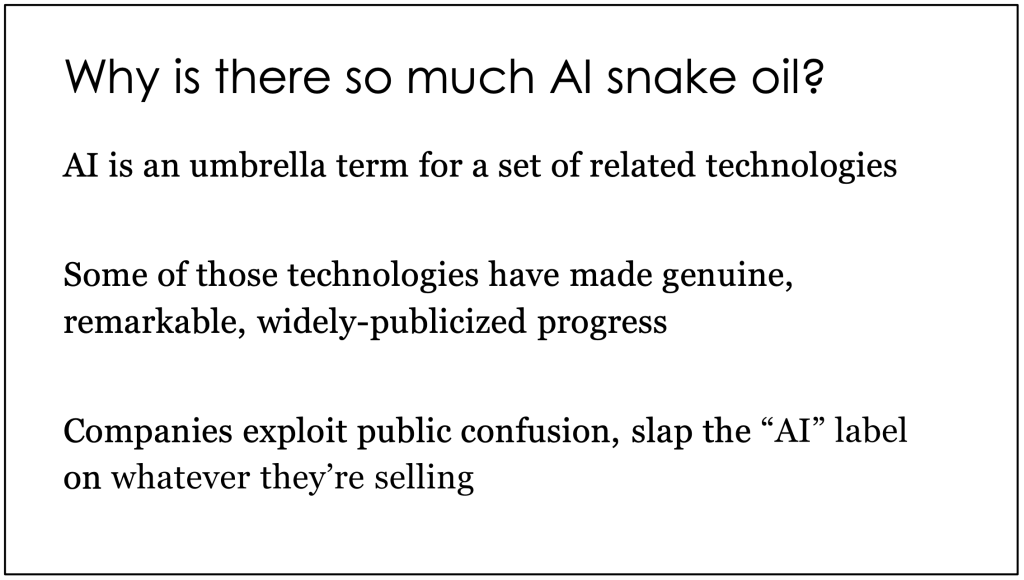
How to recognize AI snake oil by Arvind Narayanan of Princeton University
The Cost of Credulity
Believing in GenAI Snake Oil can be more than just a disappointment; it can be a costly mistake. For a business, investing in AI products or consultancy services based on inflated claims not only wastes resources but can set back critical projects and breed a climate of distrust in the whole organization’s AI strategy.
AI Debt
The insidious spread of AI Snake Oil has broader repercussions. Beyond the immediate financial costs, there can be loss of considerable value as we create AI Debt similar to a Tech Debt.
AI Debt is the implied cost of future reworking or reimplementation required if the AI investment doesn’t pay because the promised features were not available or not working as promised.
Sowing Seeds of Doubt on AI industry
As investors and practitioners become cautious due to previous snake oil experiences, the entire industry will face a stagnation of trust. This will slow down the adoption of potentially groundbreaking AI applications and dilutes the confidence needed for the market to continue pushing boundaries.
Identifying the Warning Signs
Detecting AI Snake Oil is a subtle skill. There are no straightforward litmus tests, but there are red flags to watch for. Claims of ‘one-size-fits-all’ solutions, lack of specific technical details, and absence of verifiable results are warning signs that an AI product might not be all it’s cracked up to be. Product has been in existence for few years and they were never talking about AI and suddenly now they are company that was build on AI principles and everything they do id Generative AI.
How to recognize AI Snake Oil
AI Snake Oil presents a pressing challenge to the burgeoning AI industry, but it is one that can be overcome through a combination of individual vigilance and collective responsibility
Investigate Before Investing
Before making a purchase or approving a contractual relationship with an AI provider, you must cultivate a healthy skepticism. This involves digging into use case examples, asking for details about training Data and methods, and ensuring that the company’s track record aligns with the purported capabilities.
Building a Transparent AI Landscape
The responsibility to mitigate the spread of AI Snake Oil does not lie solely with consumers. The AI community should be tasked with establishing ethical guidelines and industry standards that can distinguish reputable products and services from those that merely glimmer with the promise of AI magic.
Fostering Ethical AI Practices
Organizations at the forefront of AI must champion transparency, providing clear benchmarks and values that prioritize genuine results over inflated claims. By doing so, they not only protect their own reputations but also help nurture a more trustworthy landscape for AI adoption.
Steering Clear of False Promises
To navigate the burgeoning AI industry, we must remain informed and discerning. By embracing a culture of critical evaluation, we can collectively stem the tide of AI promises that exist only in the sales pitch. This means continuously educating ourselves, sharing knowledge within professional communities, and holding AI providers and developers to account for the claims they make.
